Blog
Lab dip approval for knitwear and yarn color consistency
How textile brands can plan lab dip approval for knitwear and yarn projects before color decisions create sampling or production delays.
/ Lova Tekstil Sourcing Team
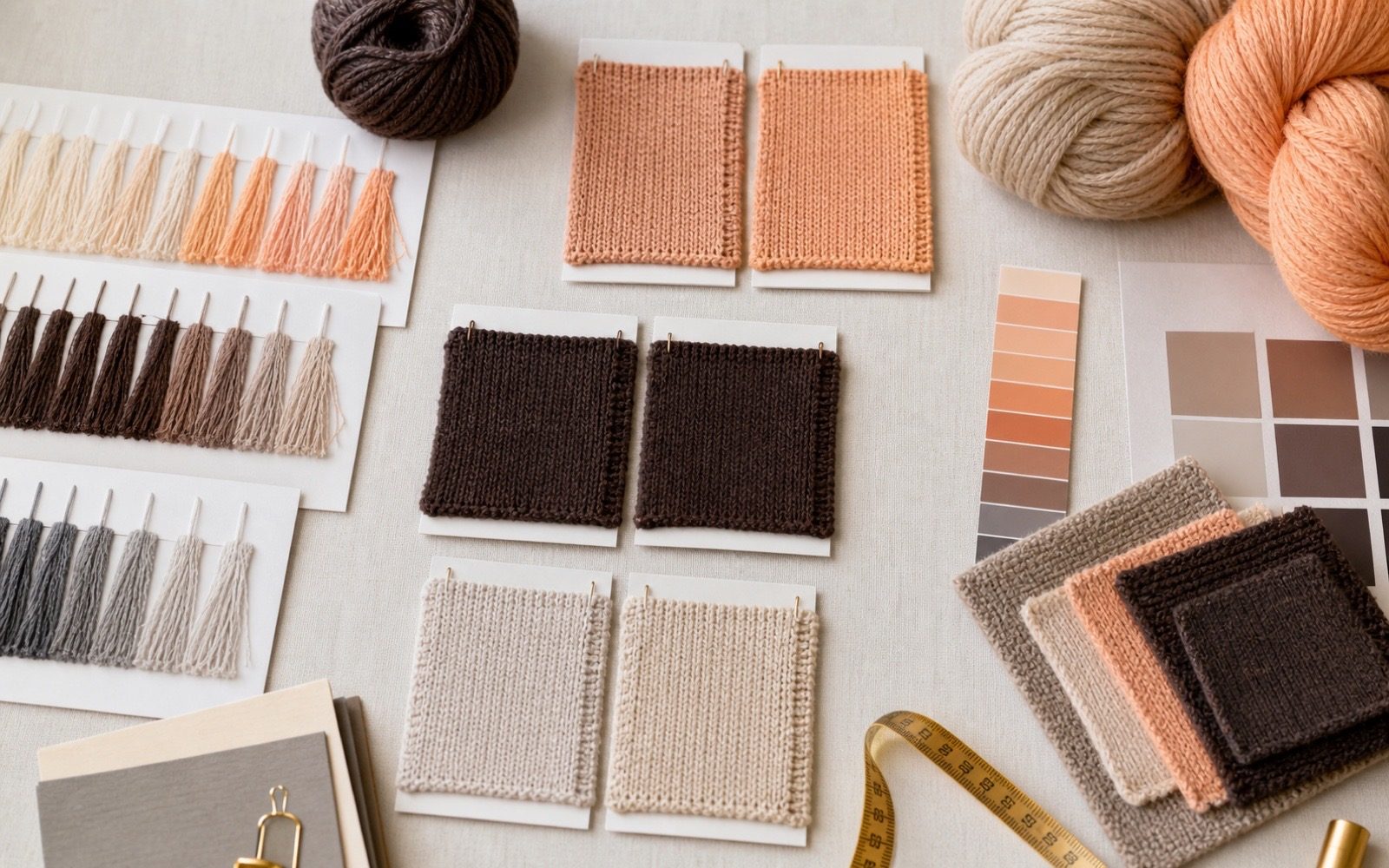

How textile brands can plan lab dip approval for knitwear and yarn projects before color decisions create sampling or production delays.
Lab dip approval is one of the most important color control steps in knitwear and yarn sourcing. It gives the brand a physical shade reference before production moves forward, especially when custom dyeing is part of the route.
For teams sourcing yarn or finished knitwear, color should be planned as a production decision, not only a creative preference.
Lova Tekstil helps brands discuss whether a project should use stock yarn, custom dyeing or a mixed route before sampling creates unnecessary pressure.
A lab dip is a small color sample prepared for review before a larger dyeing or production step. It helps the brand compare the requested shade with the supplier’s achievable direction.
This matters because color can change across fiber types, yarn structures, lighting conditions and finishing routes. A digital color reference is not enough for production approval. A physical reference gives both sides a clearer standard.
Lab dips are especially useful when:
Stock yarn can support faster development because colors are already available. This can be useful for early sampling, showroom pieces or projects where a close commercial shade is acceptable.
Custom dyeing gives more control, but it adds approval time and may affect minimums. The choice between stock and custom routes should be made early.
The Stock yarn vs custom dyeing guide explains how brands can compare these routes before sampling.
A shade can look different on different fibers. Cashmere, wool, cotton, silk and fancy yarns can all change the way color appears. Texture, gauge and finishing can also affect depth and consistency.
Brands should review color as close to the final material and construction as possible. A flat paper chip may help communicate direction, but it should not be treated as the only production standard for a knitted product.
For knitwear, it is helpful to check:
Lab dip approval can create delays when the timeline does not allow for review and correction. A first dip may be accepted, but it may also need adjustment.
A practical timeline should allow for:
The Sampling Timeline Planner can help teams see whether color approval fits the planned delivery window.
Color feedback should be clear enough for the supplier to act on. Comments like “make it nicer” or “more premium” are difficult to translate into a dyeing correction.
Better comments describe direction:
If a brand uses internal color names, those names should be connected to physical references.
A useful lab dip brief should include:
This gives Lova Tekstil enough context to discuss realistic color routes with yarn suppliers and manufacturers.
Lab dip approval is not bureaucracy. It is a risk control step. When color is physically reviewed before production, the brand and supplier can align on expectations before larger commitments are made.
The process works best when it is planned early, connected to material choice and treated as part of the production critical path.
A lab dip is a small dyeing or color sample prepared so the brand can review shade direction before larger material or production commitments.
Lab dip approval should be planned before production timing is fixed, especially when exact brand colors, custom dyeing or color continuity are required.
Stock yarn can reduce the need for custom lab dips when the available shade is acceptable, but exact color projects may still need a custom approval route.