Blog
Trims and accessories brief for knitwear and socks production
What brands should define for trims, labels, buttons, cords, hangtags and accessories before knitwear or socks production starts.
/ Lova Tekstil Sourcing Team
What brands should define for trims, labels, buttons, cords, hangtags and accessories before knitwear or socks production starts.
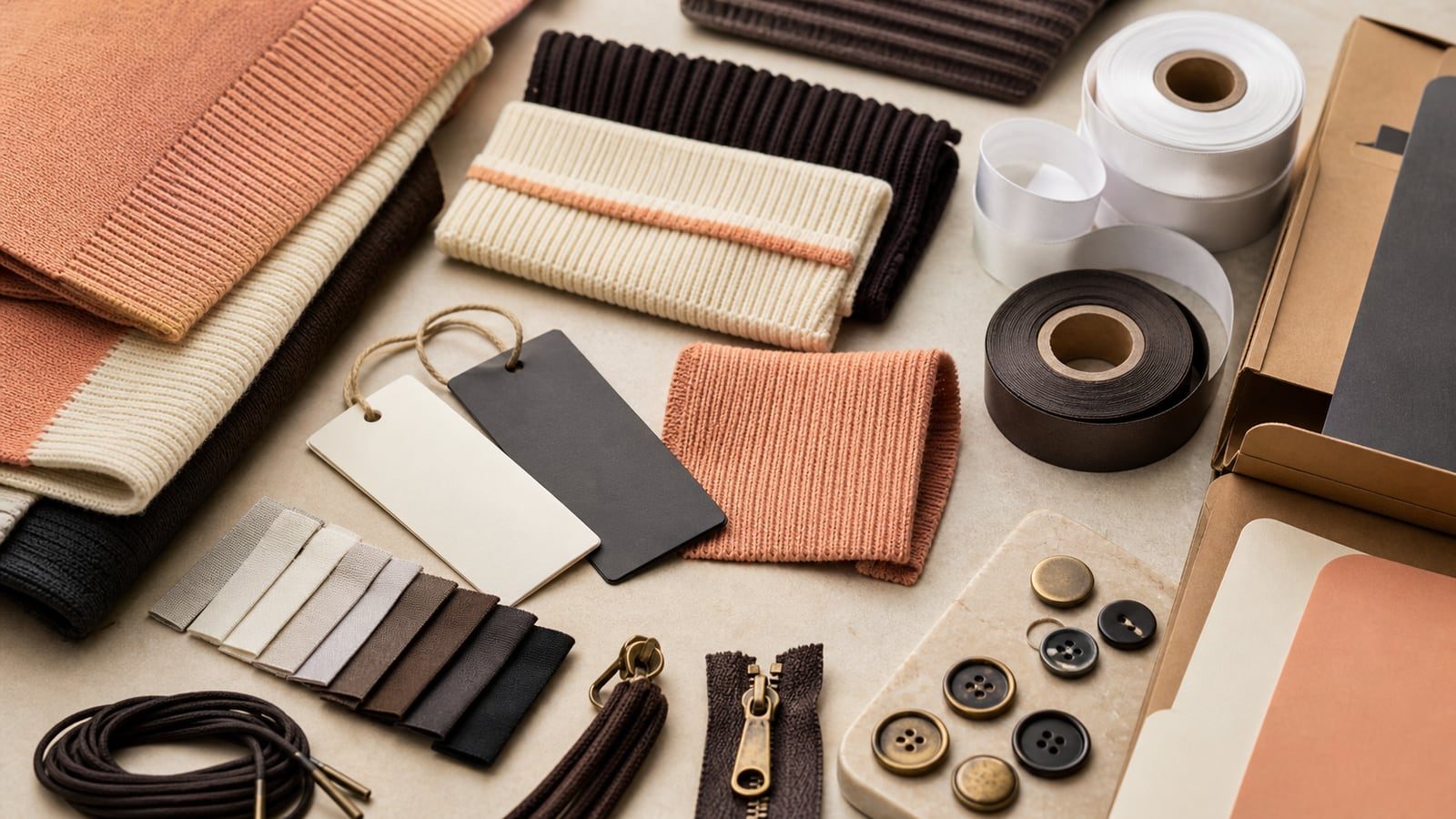
Trims and accessories are often treated as small details, but they can affect cost, sampling, compliance and shipment timing. A knitwear style may need buttons, cords, labels or hangtags. A socks project may need packaging bands, size stickers, header cards or branded carton instructions.
For textile sourcing in Turkey, a trims and accessories brief helps suppliers understand the full product before quoting or sampling. It also keeps the approved sample standard from changing late because one component was missed.
Start with a simple component list. If the product has no trims beyond labels and packaging, say that clearly. If there are several components, each one should have its own line in the brief.
Common items include:
The private label packaging and labeling brief covers labeling and packing in more detail, but the trims brief should connect those details to the actual product.
The supplier needs to know where each trim is used and what it must do. A decorative button, functional button and spare button have different implications. A label sewn into a neckline is different from a label attached to packaging.
For each trim, define:
Photos or marked sketches can help, but the written brief should still make the instruction clear.
Artwork and material are different decisions. A hangtag design may be approved, but the paper weight, string, finish and barcode position may still be open. A woven label artwork may be ready, but the yarn color, fold type and edge finish need confirmation.
Brands should clarify:
Avoid relying on low-resolution screenshots for production components. Suppliers need clean files and written specifications.
Trims can create their own MOQ and lead time pressure. Custom buttons, woven labels, printed packaging or special cords may take longer than the garment sample itself.
Ask:
The textile MOQ planning guide can help brands see how component minimums affect the full order.
Some trims affect testing and care. Metal parts may need corrosion checks. Dark labels can bleed. Cords and small parts can create safety or customer-specific requirements. Packaging may need recyclable material claims or barcode standards.
Before production, check:
The trims brief should avoid unsupported sustainability or compliance claims unless documentation is available.
If trims are not included in the development sample, the team should identify how they will be approved. A sample with placeholder buttons or missing labels is sometimes acceptable, but the missing components must be tracked.
Useful approval language:
This helps prevent a trim decision from becoming a shipment blocker.
At handover, the supplier should have one current trims and accessories reference. It should match the approved sample, the latest product brief and the packaging instructions.
Include:
The production handover checklist is the right place to connect trims with yarn, size specs, color approvals and shipment timing.
Trims and accessories are the non-main-fabric components of a product, such as labels, buttons, zippers, drawcords, tapes, hangtags, packaging and small metal or plastic parts.
Trims can affect cost, lead time, compliance, care labeling, packaging and the approved sample standard, so they should be clarified before production decisions are locked.
A trims brief should include component list, placement, material, color, size, artwork, supplier route, approval sample, quantity, packaging use and any testing or compliance requirements.