Blog
Textile defect review library for clearer supplier feedback
How brands can build a textile defect review library for knitwear and socks quality discussions with suppliers.
/ Lova Tekstil Sourcing Team
How brands can build a textile defect review library for knitwear and socks quality discussions with suppliers.
Supplier feedback is clearer when everyone uses the same language for quality issues. A comment like “the sample looks messy” does not tell the supplier what to correct. A textile defect review library helps brands describe the issue, show an example and explain whether the problem blocks approval.
For knitwear, socks and textile sourcing in Turkey, the library does not need to be complicated. It should be practical enough for sample review, production checks and final quality discussions.
The library should reflect the product categories the brand actually develops. A knitwear program and a heavy-gauge socks program may share some issues, but they also have different risk areas.
For knitwear, include:
For socks, include:
The textile quality control checkpoints guide can help decide which risks belong in the review process.
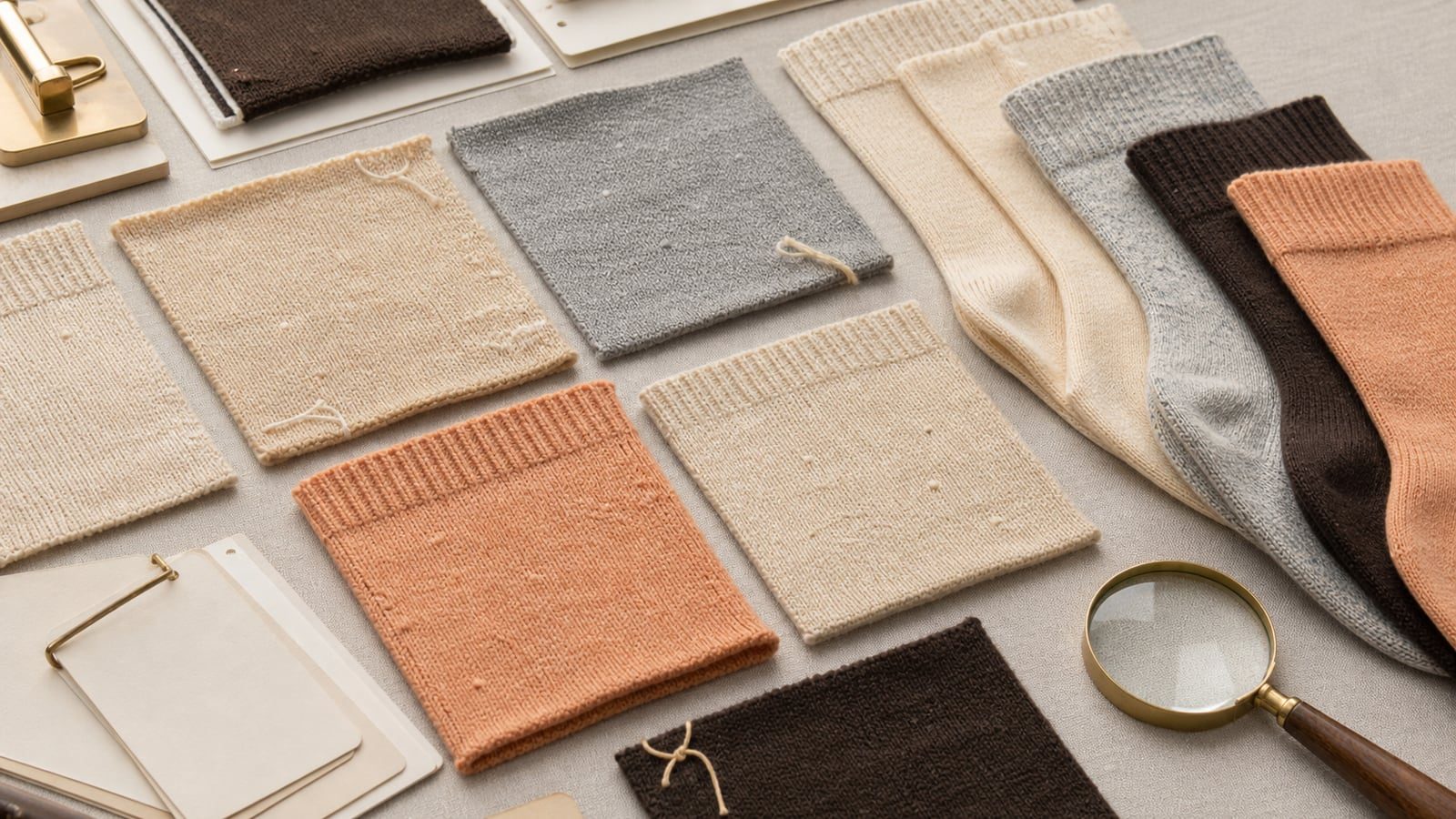
The best defect library uses simple terms supported by photos. The photo should show the issue clearly, but the written description should explain what the team is seeing.
For each entry, record:
Avoid inventing overly technical names if the supplier and brand will not use them consistently. Clear and shared language matters more than complex wording.
Not every issue has the same effect. A tiny loose yarn on a development sample may need monitoring. A visible shade band across bulk production may block shipment.
A simple severity model can work:
The important part is consistency. If the same defect is treated as minor in one meeting and critical in another, supplier feedback becomes difficult to follow.
The library should help teams decide what is acceptable, not only name what is wrong. For example, a small amount of natural yarn variation may be acceptable in a rustic wool blend. The same shade variation may be unacceptable in a clean luxury knitwear program.
For each defect type, define:
This is especially useful when several suppliers, factories or customer teams are involved.
When sending feedback, reference the defect library directly. Instead of saying “fix the cuff,” the brand can say the cuff tension is a Correct-level issue, attach the relevant photo and specify the target change.
Helpful feedback format:
The fit sample feedback post gives more structure for converting visual observations into supplier actions.
A defect library becomes more useful when it is used beyond sampling. Inline checks, final inspection and post-shipment review should use the same terms where possible.
During production, the library can support:
This creates continuity between development and quality control instead of treating each issue as a one-off complaint.
The library should not become a folder full of old, unclear photos. Review it after each season or project group.
Remove examples that are no longer useful. Add new issues that caused delay or confusion. Update acceptance notes when the brand’s product quality level changes.
Useful maintenance questions:
The result is a practical reference that improves both sourcing and supplier communication.
A textile defect review library is a shared set of photos, swatches, terms and acceptance notes that helps brands and suppliers discuss quality issues consistently.
A practical library can include pilling, shade variation, twisting, loose yarns, dropped stitches, rib tension, measurement issues, stains, holes, seam problems and packaging defects.
It reduces vague comments by showing what the brand means, where the issue appears, how severe it is and whether it blocks approval or needs monitoring.