Blog
Heavy-gauge sock construction: cuff, heel, toe and handfeel decisions
A sourcing guide to heavy-gauge sock construction, including cuff, heel, toe, gauge, yarn route and comfort decisions before sampling.
/ Lova Tekstil Sourcing Team
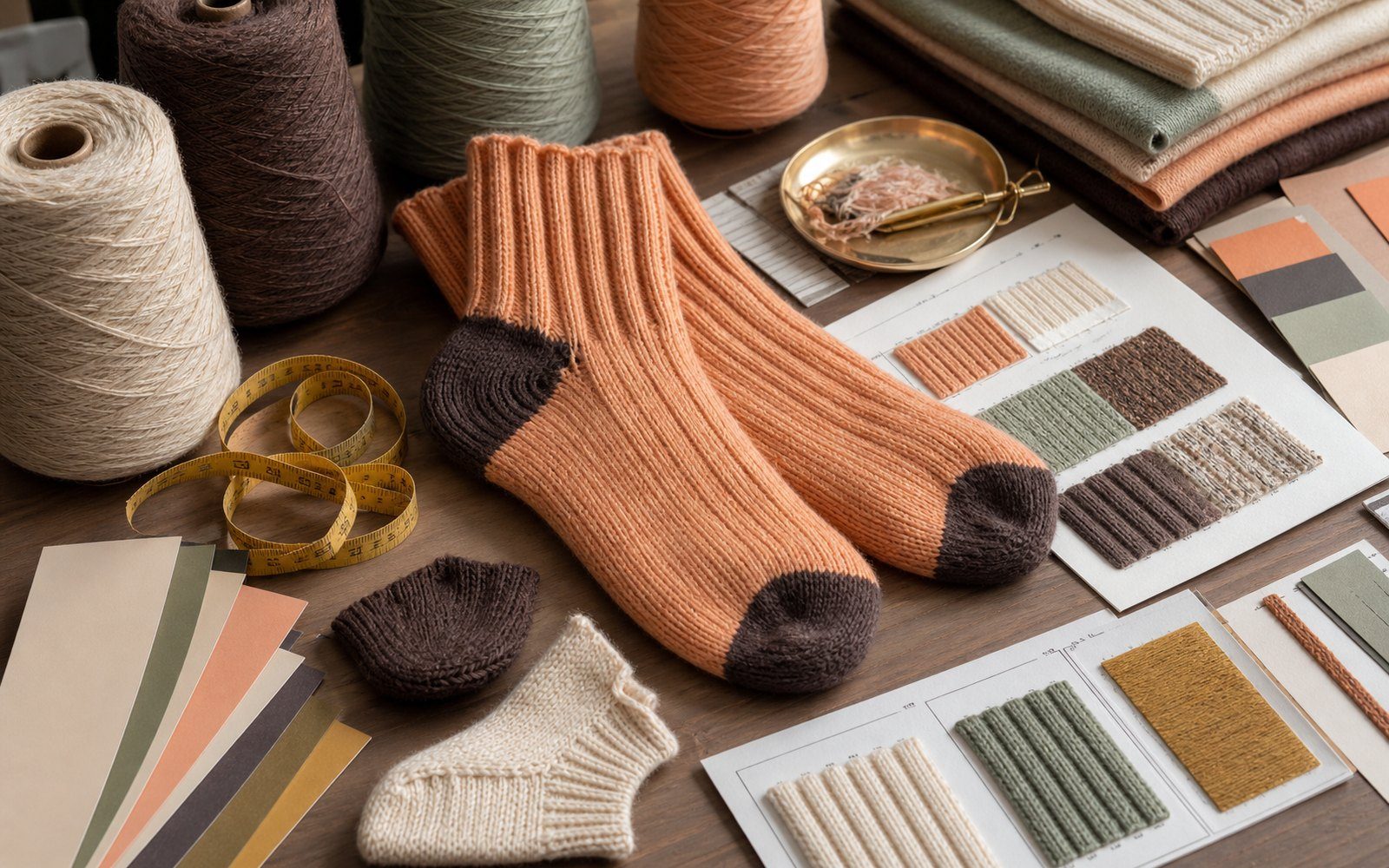

A sourcing guide to heavy-gauge sock construction, including cuff, heel, toe, gauge, yarn route and comfort decisions before sampling.
Heavy-gauge sock construction is a tactile decision as much as a technical one. The product has to feel warm, stable and comfortable, while also meeting the brand’s cost, durability and delivery expectations.
Lova Tekstil supports socks sourcing in Turkey for heavy-gauge products such as 3, 6 and 9 gauge socks, along with home socks, sleeping socks, travel socks and related categories. A good brief connects construction decisions with the way the sock will be worn.
The first construction question is the intended use. A thick home sock does not need the same behavior as a travel sock or a premium gift sock. The expected use shapes warmth, stretch, foot comfort, durability and care.
The brief should define:
The Socks Gauge & Size Planner can help organize early assumptions before supplier review.
The cuff can make or break the wearing experience. A cuff that is too loose may slip. A cuff that is too tight can feel uncomfortable, especially in a thicker sock. In heavy-gauge products, cuff structure is highly visible and should be discussed before the first sample.
Brands should describe whether the cuff should feel:
This helps the supplier evaluate rib structure, elastane support if needed and the relationship between yarn thickness and recovery.
Heel and toe construction affect comfort, appearance and durability. A heavy-gauge sock may need a reinforced feel, a smoother toe experience or a specific visual finish depending on the product position.
Before sampling, clarify:
If the sock is mainly for indoor or sleeping use, softness may matter more. If it is intended for travel or longer wear, durability and recovery may become more important.
Material and construction should be planned together. Wool, cashmere, cotton, silk and blended yarns can all behave differently in heavy-gauge structures. A luxurious blend may feel soft but need support for recovery. A more durable route may feel stable but less lofty.
The socks material blend planning guide explains how warmth, stretch and durability influence fiber decisions. Construction adds another layer: rib, density, heel, toe and finishing can all change the final handfeel.
Useful material questions include:
Sock sizing is not only a size chart. Construction affects how the sock stretches across the foot and leg. Heavy-gauge styles can feel different across sizes because thickness, yarn recovery and rib behavior are more noticeable.
The brief should connect size range with:
The socks sizing and fit planning guide can support this review before the first sample is approved.
Heavy-gauge socks should be checked against the approved sample, not only against a written spec. The final review should cover handfeel, dimensions, stretch, toe comfort, heel shape, color, fiber content and packaging accuracy.
Quality checkpoints can include:
These points connect construction with production readiness, especially when multiple colors or sizes are produced.
A supplier-ready brief should include:
This gives Lova Tekstil a clearer basis for matching the request with manufacturer options and sample routes in Turkey.
Heavy-gauge sock construction uses thicker yarns and more visible structure, so cuff, heel, toe, stretch, warmth and handfeel decisions have a stronger effect on the final product.
Brands should define gauge, use case, fiber direction, cuff feel, heel and toe expectations, size range, stretch, care and target retail position.
The same yarn blend can feel different depending on gauge, rib, density and finishing, so construction and material choices need to be evaluated together.