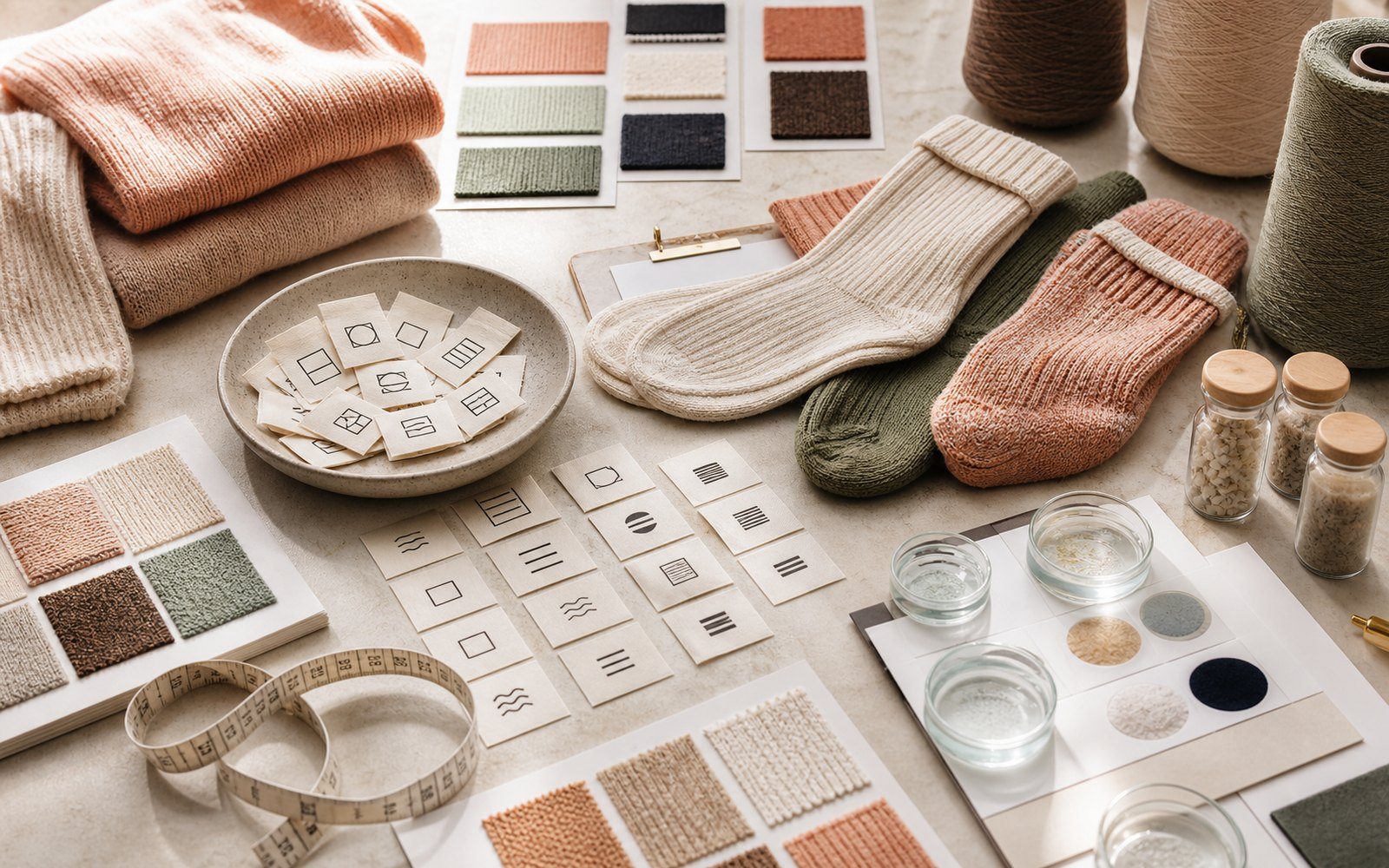
Care label and testing plan: avoiding late textile production changes
How brands can plan care labels and testing needs for knitwear and socks before bulk production, from fiber content to wash and shrinkage checks.
/ Lova Tekstil Sourcing Team
Care labels and testing plans are often treated as final details, but they can create late production changes when they are left too long. For knitwear and socks, care instructions need to match the fiber composition, construction, finishing and buyer expectations.
Lova Tekstil helps brands connect production brief details with practical sourcing routes for knitwear, yarn and socks. A care label plan does not replace legal or laboratory advice, but it does help the supplier understand what must be checked before bulk production moves too far.
Start with fiber content
The care label begins with the material route. If the fiber composition is still open, the label cannot be final. A change from one blend to another may affect fiber declaration, washing instruction, customer expectation and testing needs.
The brief should include:
Final or target fiber composition
Yarn article or supplier reference
Any certified or traceable material claim
Contrast yarn or trim content if relevant
Size or style variations that use different materials
This is especially important when a product uses blends, fancy yarns or premium fibers.
Connect care instructions with product use
Care instructions should be realistic for the way the customer will use the product. A delicate luxury pullover, heavy-gauge home sock and travel sock may each need a different balance of softness, durability and care expectation.
Before approving care language, the brand should consider:
Is hand wash acceptable for the customer?
Is machine wash required by the buyer?
Does the product need low-temperature washing?
Is drying method important for shape?
Could care expectations affect after-sales risk?
The care route should be discussed before the bulk order starts, not after labels have been ordered.
Define testing needs early
Testing requirements can come from the buyer, retailer, market, brand policy or product risk. Not every project needs the same test package, but the supplier needs to know which checks are expected.
Care labels, brand labels, hangtags and packaging should be planned together. A product may need care symbols, fiber content, country of origin, size, barcode, carton information or buyer-specific wording. If one part changes late, the packaging plan may need to change too.
The private label packaging and labeling brief covers this broader label and packaging relationship. For care labels, the key point is to confirm the information before trims are ordered.
Watch certification and claim language
If the product uses certified yarn, recycled content, organic fiber, responsible wool or a traceability claim, label wording should match the documentation route. A claim that is acceptable in a sourcing conversation may not be ready for a care label, hangtag or public product page.
The brand should confirm:
Which claim can be made
Which document supports it
Whether the manufacturer route supports the claim
Whether the claim appears on the care label, hangtag or packaging
The approved sample should support the label direction. If the sample shrinks, pills, twists, loses shape or changes handfeel after care, the care instruction may need review. If the product needs a stronger care promise, the material or construction route may need to change.
For socks, stretch recovery and cuff behavior can be important after wear and care. For knitwear, dimensional stability, pilling and handfeel may be more visible to the customer.
Testing and label planning should therefore connect back to the approved sample, not only to the written fiber composition.
Build a care label and testing brief
A practical brief should include:
Product category and style count
Final or target fiber composition
Care expectation
Buyer or market requirements
Testing required before shipment
Label languages and symbols
Size, origin and barcode needs if relevant
Certification or material claim wording
Approval owner and deadline
Whether labels, hangtags and cartons are already ordered
This helps Lova Tekstil identify late risks before production handover and shipment preparation.
Frequently asked questions
When should care label planning happen?
Care label planning should happen before bulk production so fiber content, washing instructions, label layout and testing needs can be checked without delaying shipment.
What testing questions matter for knitwear and socks?
Common questions include shrinkage, colorfastness, pilling, dimensional stability, stretch recovery, fiber composition and whether the care instruction matches the material route.
Why can care labels create production delays?
Care labels can create delays when fiber content, language, symbols, buyer requirements or test expectations are not confirmed before trims and packaging are ordered.
Essential site functions are always available. With your permission, Google Analytics helps us understand aggregate visits and tool use. It stays off until you allow it.